.jpg)

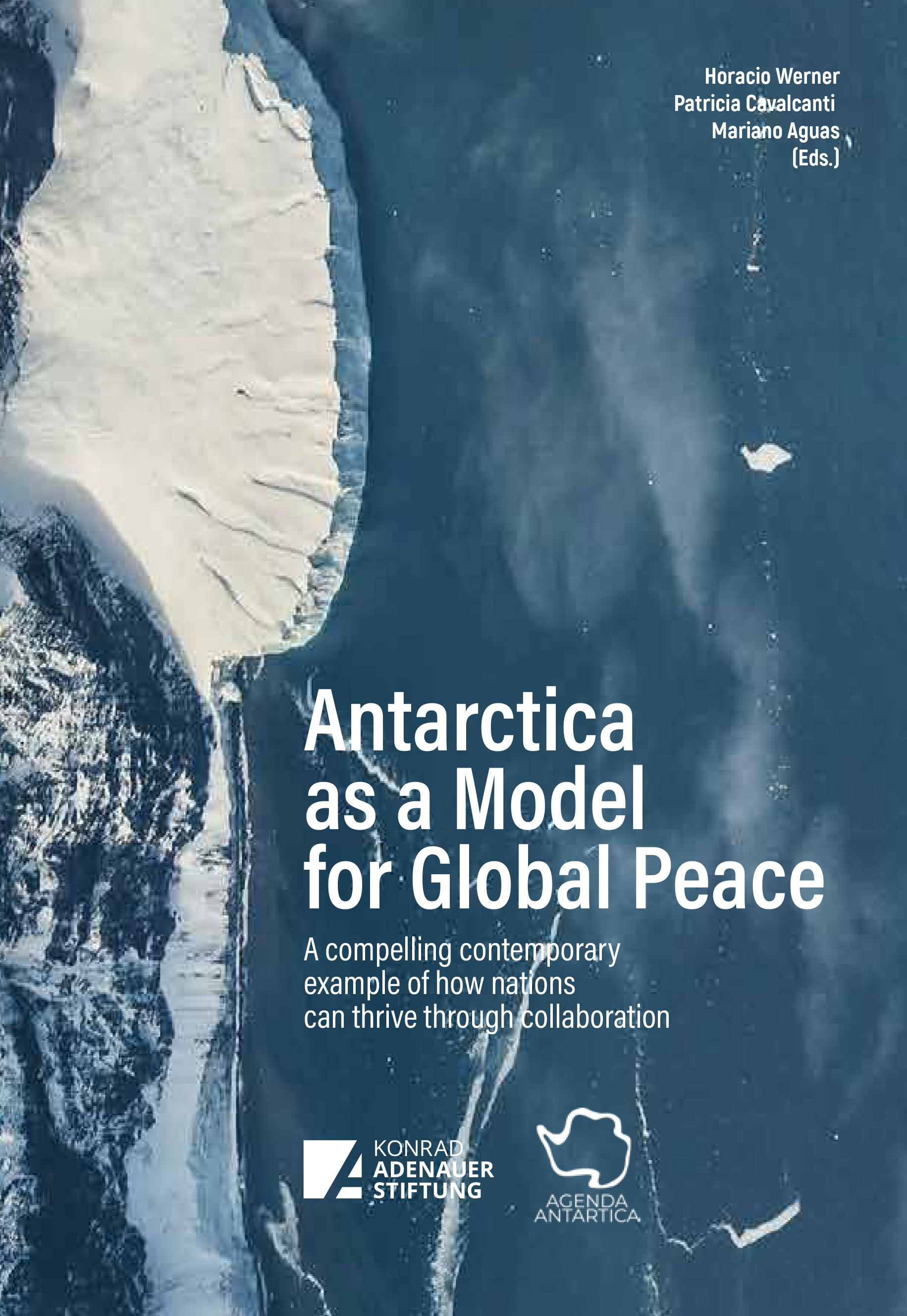
"Antarctica is not a utopia — it is a precedent. For more than six decades, nations that compete elsewhere have cooperated here: sharing scientific data, setting aside territorial claims, and committing jointly to the protection of a shared environment. This publication asks what that record teaches us, and whether its lessons can travel."
Agenda Antártica · Antarctica as a Model for Global Peace, 2026
Introduction
About the Publication
A collaborative publication by Agenda Antártica bringing together experts from science, diplomacy, and international law.
Antarctica as a Model for Global Peace is a collaborative publication by Agenda Antártica bringing together leading scholars, scientists, diplomats, and policymakers to examine the Antarctic Treaty System — the international framework that has governed the continent since 1959 — as one of history's most enduring examples of multilateral cooperation.
The book's central argument is that Antarctica's stability rests on three interconnected pillars: a commitment to international peace and the peaceful resolution of territorial disputes; scientific collaboration as a foundation for political trust; and the collective protection of a shared environment. These dimensions have not operated in isolation — each has reinforced the others, producing a system of governance that has remained intact for over six decades.
Drawing on firsthand diplomatic accounts, scientific research, and comparative policy analysis, the book contributes to ongoing global discussions on the future of multilateralism, environmental governance, and the conditions under which international cooperation can endure.
Why It Matters
A Contribution to
Global Policy Debate
At a time when multilateral frameworks are under pressure and the conditions for international cooperation are actively debated, Antarctica offers something rare: not a theory, but a working precedent — sixty-five years of peaceful governance, sustained across geopolitical divisions that have fractured cooperation everywhere else.
This publication is addressed to policymakers, researchers, legal practitioners, and civil society actors engaged in questions of international governance, climate diplomacy, and environmental law. It does not propose Antarctica as a simple template, but as a source of substantive lessons about what conditions allow cooperation to take root and endure.
The Antarctic Treaty System remains one of the few areas of international governance where sovereignty disputes have been effectively frozen, scientific exchange has transcended political division, and environmental protection has been elevated as a collective responsibility. That record warrants serious study. This publication approaches it through focused reflection — and is part of a broader initiative alongside the Journal of Antarctic Affairs, through which Agenda Antártica sustains ongoing, peer-reviewed research and dialogue on Antarctic governance and its implications for the world.
1959
Antarctic Treaty signed — the foundation of one of the most successful peace agreements in modern history
56+
Nations party to the Antarctic Treaty System — over 80% of world population
0
Military conflicts on the continent in recorded history
30+
Contributing experts from research institutions, governments, and civil society
Summary
What the Book Contains
The publication is organised around three interconnected dimensions of the Antarctic model: international peace and cooperative governance; the relationship between science and diplomatic trust; and the collective protection of a shared environment. Together, these form the analytical framework through which the book addresses its central question — what conditions make durable international cooperation possible?
The Antarctic
Treaty System
How twelve nations set aside territorial rivalries to designate Antarctica a permanent zone of peace, and how the agreement has grown to over 56 parties.
Science as a
Bridge to Diplomacy
How collaborative research became the foundation for political trust, enabling cooperation across Cold War divisions that seemed insurmountable.
Environmental
Stewardship
The role of the Madrid Protocol in protecting Antarctic ecosystems, and what this environmental governance model can offer to the broader world.
Contribution to
Policy Debate
The book is intended as a substantive contribution to ongoing policy discussions on multilateralism, climate diplomacy, and international environmental law — addressed to practitioners and researchers alike.
Open Access · Free Publication
Read or Download
the Book
The publication is freely available in full. It is intended for researchers, policymakers, educators, and all those engaged in questions of international cooperation, environmental governance, and peace.
PDF · Published by Agenda Antártica · Free to share